I hesitate to give any advice regarding a stargazing experience in New Zealand since on both occasions when I’ve taken astronomer groups to view the beauty of the southern skies, I’ve been thwarted by a hundred per cent cloud cover.
But not every one is unlucky as I have been. As a country, New Zealand offers some of the most breathtaking stargazing experiences in the world – you just need to plan around the weather.
This is why I’ve put together a list of the best locations in New Zealand to enjoy stargazing. In some places you can enjoy the assistance of guides, often from local universities, who will guide you through the features of the night sky with the aid of powerful telescopes.
I’ve also answered some of the most commonly asked questions around stargazing experiences in New Zealand, to help you decide when and where to head.
Where is the best skygazing in New Zealand?
New Zealand has a lot of great spots for stargazing, and you’ll often find that remote spots in any part of the country will offer wonderful views of the night sky. However, here are some of the best dedicated spots.
Lake Tekapo & Mt John
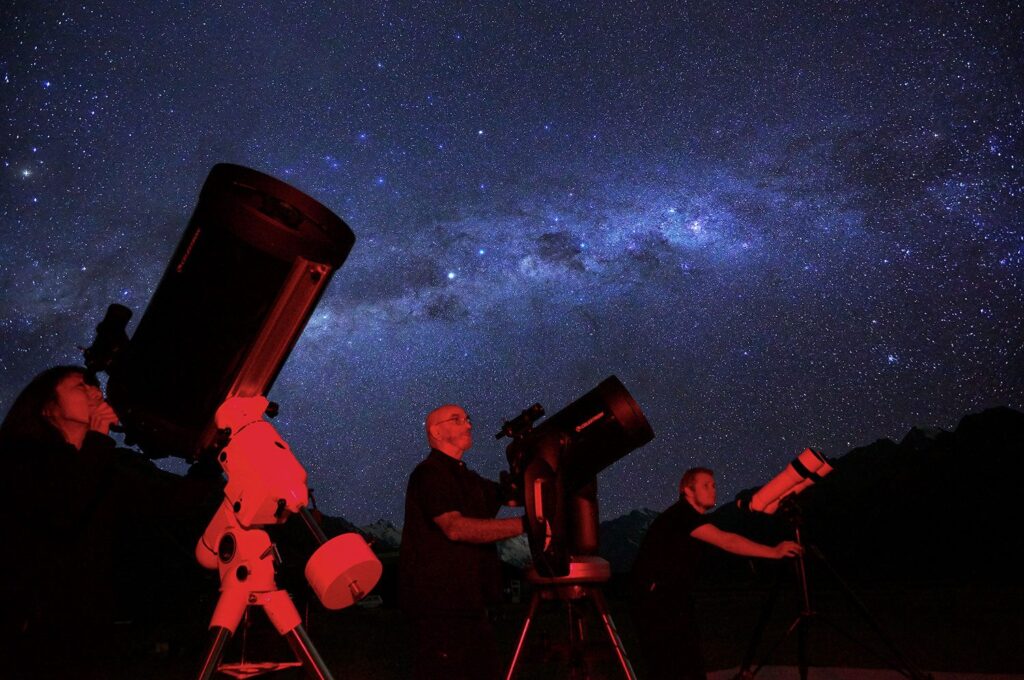
Home to the Dark Sky Project and high-altitude telescope tours atop Mount John. This is probably the best location in New Zealand since it is home to the world’s largest International Dark Sky Reserve. It’s a late start to meet up with your fellow stargazers at the Dark Sky Project Base in Tekapo, where you’ll be briefed by the staff and allocated cold-weather jackets to keep you warm at the observatories on the top of Mount John. Then you’re transported by Land Rover up the side of the mountain on a steep, winding mountain road, which takes about fifteen minutes, and then you’ll meet some of the guides who will support your observations.
You’ll start by looking at the stars with the naked eye before moving on to explore the sky through one of the observatory’s high-powered telescopes. This includes the impressive 16-inch telescope in the private observatory. If you have a DSLR camera, talk to the guides about the way to get the best results with photographs of the sky. And if you need sustenance whilst in pursuit of those stars, then there’s mugs of hot chocolate on hand.
Every night reveals something new, and hopefully you’ll get sight of star clusters, constellations and maybe some far-off planets.
After two hours, head back down the mountain and into that cosy bed with stars in your eyes!
Alternative Stargazing
So, what happens if you do get bad weather or heavy cloud cover? Well, the Dark Sky Operators have got that situation in hand and offer a virtual stargazing experience. Using real-time astronomical data, the team simulate the exact night sky you would have seen on your tour, including visible planets, constellations and deep sky objects. As part of the experience, you’ll journey through specific indoor places including:
The Brashear Telescope, where you’ll learn about its history and design
The Pond Room, where light, darkness and stories about our place in the cosmos create a reflective experience.
The Model and Stars room, which illustrates the solar system and the wider universe.
These spaces deepen your understanding of the worlds above you.
The Hermitage Mount Cook
Personally, I think if you can get to Tekapo, this is the best place on South Island for stargazing, but many travellers do stay at the Hermitage in Mount Cook, and it may be more convenient to take their tour, rather than travel out and back from Tekapo.
These tours involve a short van ride to their Star base platform, from which you can use their powerful telescopes to view the night sky. Rather a more commercial operation lasting 75 minutes, but if you’re short on time or not overnighting in Tekapo, probably the best option.
Stewart Island (Rakiura)
If you’re headed to Stewart Island to see kiwis, then you might as well take time out to look at the dark skies above. Over 85% of the island is protected national park land, keeping artificial light to a bare minimum. And because of its deep south location in New Zealand, it is one of the best inhabited places to catch the Southern Lights.
There are guided tours with local operators such as Twinkle Dark Sky Tourswhich offer specialised night experiences complete with cosy chairs, warm rugs, and hot drinks. With luck, you’ll see planets like Saturn and Mars, star clusters, the moon in high detail and seasonal celestial events such as Matariki.
Kaikōura
Kaikoura is the most recent location on New Zealand’s South Island to gain status as an official Dark Sky sanctuary. It was officially recognised as an International Dark Sky Sanctuary in September 2024 after a four-year campaign by a group of volunteers and local astronomers. It is just the 22nd location globally to earn this recognition and the third destination in New Zealand alongside Aotea Great Barrier Island and Stewart Island/Rakiura.
It was not a demand to see the night skies clearer, although for many residents that would have been a factor, but rather an environmental concern that motivated this campaign. This was to help protect the Hutton’s shearwater (Puffinus huttoni), or Kaikōura tītī, an endangered seabird in the family Procellariidae.
This bird is found in waters around Australia and New Zealand, but it only breeds in the Seaward Kaikōura Range in New Zealand. It is the only seabird in the world that breeds in an alpine environment. The birds fly at night but can become disoriented by bright lights. Fledglings are particularly vulnerable. They leave their nesting burrows in the mountains in the dark and can crash-land on roads in the town. They are typically not able to take off again, making them vulnerable to being run over by vehicles or succumbing to predation by dogs or cats. Artificial lighting in the town led to over 200 birds crash-landing during the 2014/15 breeding season.
It is hoped that with the new Dark Sky designation, the Hutton’s shearwater will be protected from the effects of artificial light.
The Moana Skies Astronomy Centre is the home base in Kaikōura to explore astronomy and safely view the Sun through specialised solar telescopes. Inside the centre you’ll find interactive displays, telescopes, astronomy equipment, educational resources, and a Virtual Reality space experience.
This company offers a different range of tours, their most popular being the Cosmos or Lunar tour. Tours start at 7 pm.
Whale watching during the daytime and stargazing at night. Sounds like a great combination!
Aotea / Great Barrier Island
The best vantage point forstargazing on North Island is Great Barrier Island, near Auckland, with zero grid electricity and pristine beach views.
To get to the island, you’ll need to take a flight of around 25 minutes. The main commercial carrier is Barrier Air, flying directly into Claris Airport (Great Barrier Aerodrome).
Alternatively, the Sea Link car and passenger ferry takes about 4.5 hours from Hamer Street in central Auckland to Tryphena or Port Fitzroy
Silver Fern Holidays can organise your accommodation on the island, provide car rental if you need it and book you in for a tour with Good Heavens.
These tours take you on a comfortable, enlightening and entertaining journey through the universe.
Frequently Asked Questions About Stargazing in New Zealand
Is stargazing in Lake Tekapo worth it?
When it comes to stargazing in New Zealand, you’ll struggle to find a location that delivers more than Lake Tekapo. Mainly because of the Dark Sky Operators virtual stargazing experience, which means that any time of year, and in any weather, you can still explore the night sky of New Zealand.
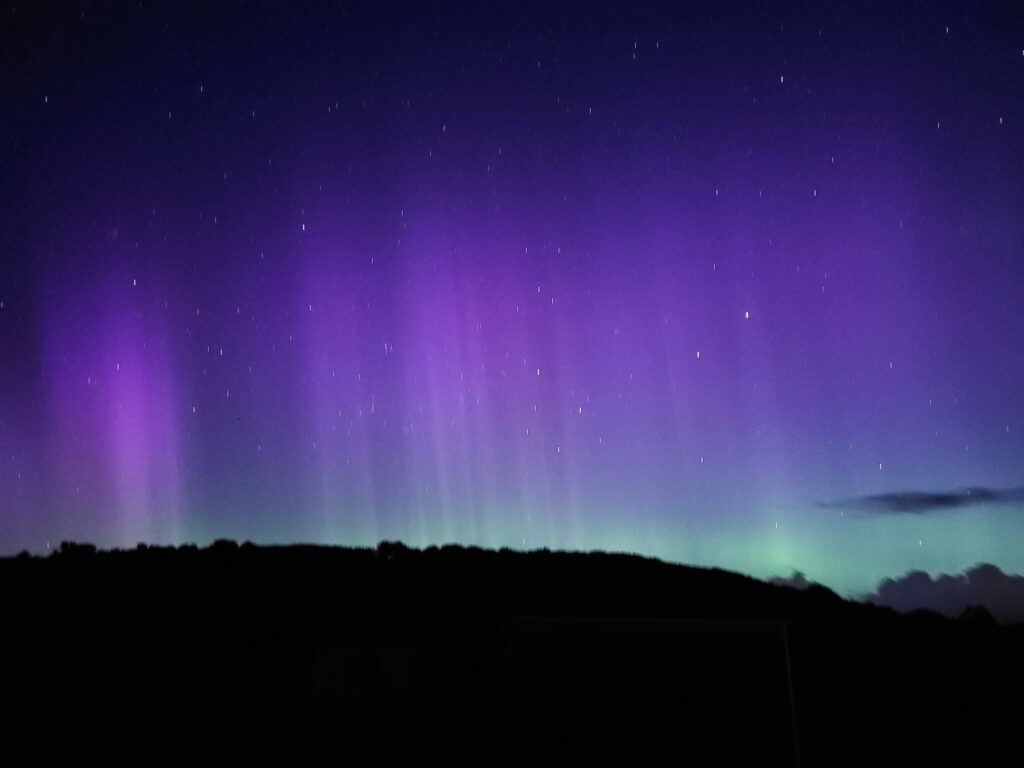
Add this to your chance to see the Milky Way and the Aurora Australis, and we think Lake Tekapo offers the best stargazing experience across the whole of New Zealand.
Where in New Zealand can I see the Milky Way?
One of the many reasons Lake Tekapo is worth adding to your stargazing tour is because it often gives the clearest views of the Milky Way. However, this galaxy can also be seen from other spots across New Zealand, including the Rakiura Dark Sky Sanctuary on Stewart Island, Tāhuna Glenorchy near Queenstown and Mount Cook National Park.
Which months can I see auroras in New Zealand?
The best time of year to see it is during the New Zealand winter (May to September), but if you’re there in late March you still have a high chance of seeing the Southern Lights.
What’s the worst time of year for stargazing?
Overall, the worst time of year for Stargazing in New Zealand is summer. While there tends to be less cloud cover during this season, nights are shorter and the depth of night needed to stargaze is very late. The warmer air can create a hazier view, which further impacts enjoyment and the Milky Way in particular can be dimmer.
However, these are generally small impacts. Realistically, New Zealand is great for stargazing at any time of year, and some observatories even offer indoor alternative options if the weather goes against you.
New Zealand as a National Dark Sky Sanctuary
It’s likely that in the coming years more locations in New Zealand will acquire Dark Sky status as the country moves to becoming a complete Dark Sky preserve. Keep an eye on our updates as to where these locations are likely to be, and ensure you book one of these experiences with us before you travel to ensure you’ll enjoy the thrill of viewing the southern skies!