Following our September post on places that you might like to visit off the general tourist trail on North Island, this month we’re looking at those unheralded gems on South Island that we think are worth a stop or a stay during your travels with Silver Fern Holidays.
In fact, we’re so enamoured with our first choice, Ōkārito, we think it merits its own blog – so here it is, with a promise that we’ll feature other less visited areas on the South Island in our next few blogs.
Ōkārito
Ōkārito may be off the beaten track, but for those who venture to this quiet corner of New Zealand’s West Coast it reveals itself to be one of New Zealand’s best-kept secrets.
Ōkārito is home to Aotearoa’s unmodified wetland, making it a sanctuary to rare and endangered species from the Kōtuku (the white heron) to the many shy wetland creatures. It’s a complete paradise for wildlife watchers, walkers and photographers.
Situated on the west coast of the South Island of New Zealand, Ōkārito is only twenty minutes north from the famous Franz Josef Glacier and only an hour and thirty minutes’ drive south from Hokitika.
Ōkārito is now a permanent home to only about thirty residents, but it is also home to over seventy different species of birds, including one of the rarest species of kiwi, the Rowi (Ōkārito Brown Kiwi) and the Mātātā a Fernbird.
One of Ōkārito’s most notable residents was Keri Hulme. She made Ōkārito her home in the late 1970s and described life in this community in her book “Homeplaces” (get hold of a copy if you can).
She drew deep inspiration from Ōkārito, its solitude, its natural beauty and its wild windswept landscape, which was reflected in her prize-winning novel ‘The Bone People’.
The novel is set on the west coast of New Zealand’s South Island and explores themes such as isolation, identity, trauma, healing and cultural identity as it delves into Māori and Pakeha heritage.
Keri Hulme made history when ‘The Bone People’ won the Booker Prize in 1985. It made her the first New Zealander to receive global literary recognition and shone an international spotlight on New Zealand’s culture and Māori heritage.
Gold Mining
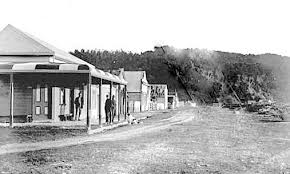
Like Hokitika, the settlement further north, Ōkārito is an old gold mining town and during the 1860s these two locations became the focal point for mining gold on New Zealand’s West Coast. During the peak of the West Coast gold rush the town’s population boomed massively with 1,500 residents. Bustling with shops, and hotels, it was a stark contrast to the deeply isolated town it is today.
A reminder of the gold mining days is Donovan’s Store, the oldest wooden building in the Westland of New Zealand. It was originally known as the Club Hotel built on The Strand, during the prominent gold mining years of 1865 and 1866. It was then converted in 1890 into a general store by James Donovan and his wife, Eva.
Since 1990 it has been registered by Heritage New Zealand as a Category One structure and serves as a community library to Ōkārito’s residents.
Ōkārito’s Lagoon
Ōkārito’s Lagoon lies immediately next to the village of Ōkārito. The lagoon is the largest unmodified lagoon in New Zealand, spanning over 3,240 hectares. The lagoon has a rich variety of mosaic tidal flats, estuaries and rainforest which eventually leads to the Tasmanian Sea. It is home to a large variety of rare bird species such as the:
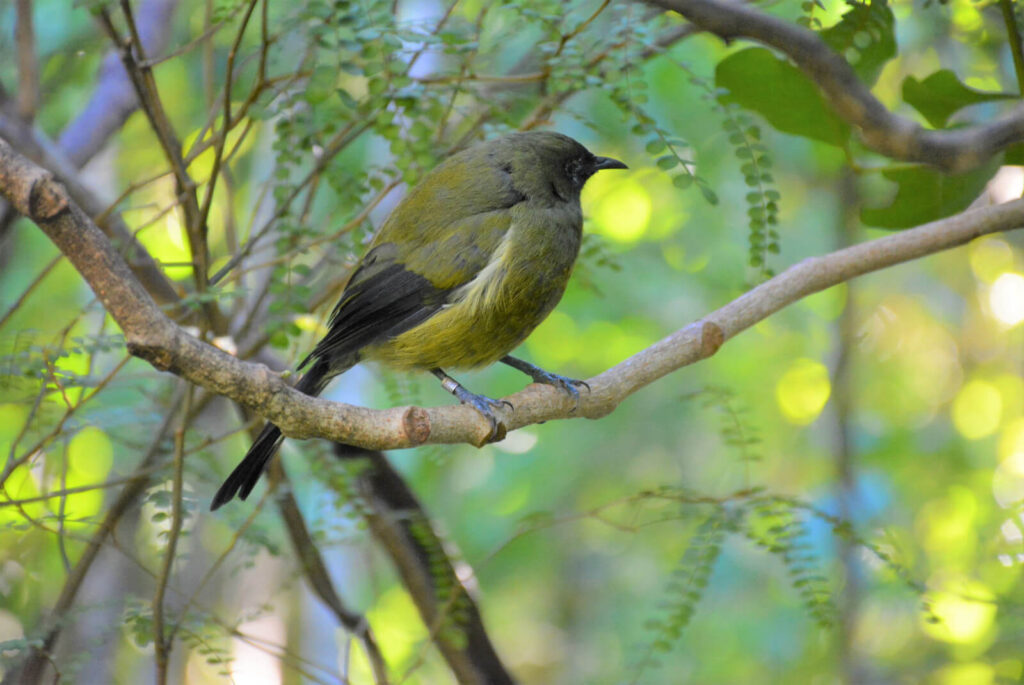
Royal spoonbill (Kotuku- ngutupapa), Pied Stilt (Poaka), Band Dotterel (Pohowera), The Caspien Tern, The Bellbird ( Korimako) South Island Robin ( Toutouwai) and Grey Warbler ( Riroriro.
There is only one protected breeding site for the Kōtuku in New Zealand and that is the north area of the Ōkārito Lagoon. The Kōtuku is a particularly prominent bird in New Zealand and is featured on the New Zealand $2 coin.
The Ōkārito Lagoon is extremely significant to the local Māori tribe, the Ngāi Tahu. The Ngāi Tahu have had great ancestral ties and are the indigenous guardians to the Lagoon as it was a significant food-gathering place for the tribe.
In 1998 the Ngāi Tahu Claims Settlement Act was passed through the New Zealand parliament. This was to settle the Ngāi claims of land under the Treaty of Waitangi and a public apology was given by the Crown dispossession of their lands by European and Australian settlers. They received a cultural redress such as access to conservation lands and co-management of natural resources.
While the Ngāi Tahu do not own all the Ōkārito Lagoon as private landowners, they are legally recognized as the kaitiaki (the guardians) and work in partnership with the Department of Conservation (DOC) to manage the Lagoon and the nearby forest.
Activities on Okarito Lagoon
Kayaking
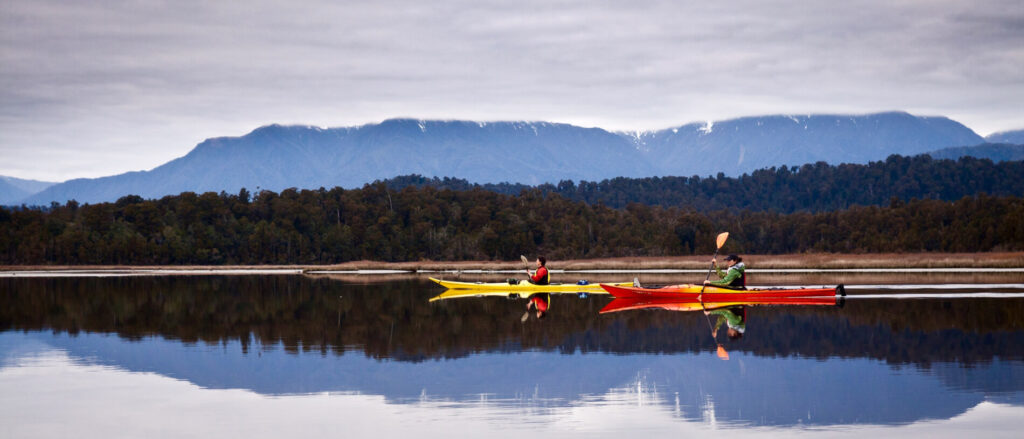
Visitors can enjoy an intimate, guided kayaking experience with the family- run business, Ōkārito Kayaks. Their passionate and knowledgeable local guides share fascinating insights into the region’s wildlife and rich history.
The company offers a wide range of guided excursions to suit different experience levels and are perfect for those who are less confident on the water
Experienced kayakers can also hire a kayak to explore the stunning Lagoon at their own pace
Walking
Ōkārito offers a wide range of scenic walking tracks that showcase the area’s immense natural beauty with coastal views and mountain backdrops.
A recommended walk for those who wish to do a short stroll is the Wetland Walk.
This gentle track winds through the bush before crossing the estuary on a curving boardwalk. From there the track gently climbs to a viewpoint that overlooks the beautiful estuary. The Wetland Walk also gives walkers the excellent opportunity to be able to spot rare native birds.
For those who wish to do a half-day hike, the Ōkārito Trig Walk is certainly one not to be missed!
It needs to be a clear day to fully appreciate this walk. It’s four kilometres leading through native forest to a stunning viewpoint overlooking the Ōkārito Lagoon, the Southern Alps and the coastline.
Boat Excursions
Taking a boat excursion in Ōkārito is something not to be missed and a rewarding way to explore New Zealand’s largest unmodified wetland. A great opportunity to see the rare birdlife and wildlife that Ōkārito has to offer.
Ōkārito Boat Eco Tours.
We highly recommend Paula Sheridan and Swade Finch at Ōkārito Boat Eco Tours. They are more than just guides, they are locals with decades of knowledge about the ecosystems, birdlife and the conservation of the lagoon.
Their tours are designed to be small and slow-paced, allowing time to listen and observe the surrounding wildlife.
The most popular option is a two-hour guided tour that departs daily at 9am.
The leisurely boat trip glides quietly through the serene wetlands and rainforest, offering incredible views and amazing opportunities to spot native birdlife. The guides share stories about the area’s rich history and their conservation work.
Accommodation
If you want to stay in Ōkārito, there is a range of accommodation from cosy eco-cabins and family friendly cottages to self-contained holiday homes with views of the lagoon or the mountains. However, you do need to book early since spaces are limited as Ōkārito remains a small, secluded town. One of our favourites, off the beaten track.
If you’re looking for a New Zealand holiday that roams across hidden gems or tourist favourites, we can help. With over 30 years of experience in planning itineraries that cater to individual interests we know how to build a trip that is tailored to you. Get in touch to find out more.




 Gold Mining
 Ōkārito’s Lagoon


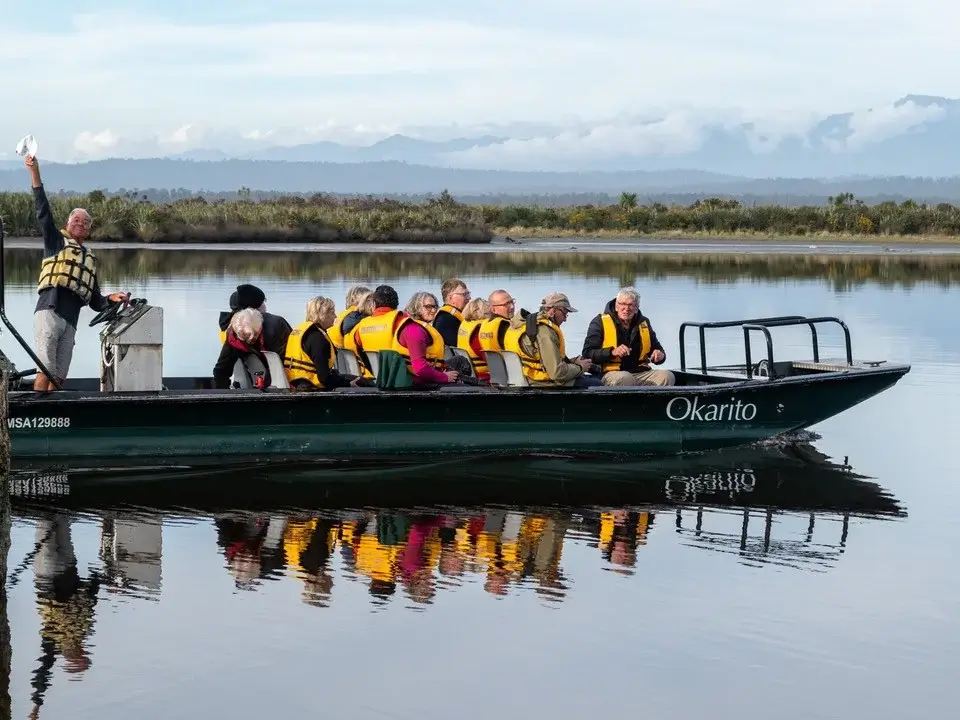 We highly recommend Paula Sheridan and Swade Finch at Ōkārito Boat Eco Tours. They are more than just guides, they are locals with decades of knowledge about the ecosystems, birdlife and the conservation of the lagoon.